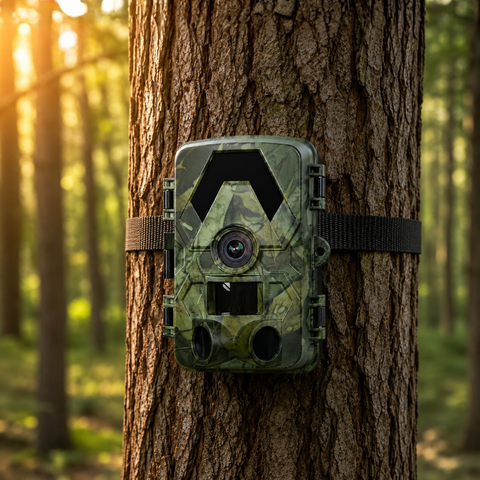
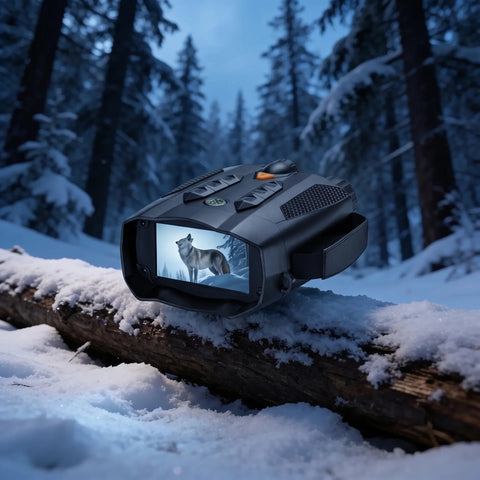

If you are shopping for a way to see in the dark, you will run into two very different technologies wearing the same label. This guide explains digital night vision versus traditional analog (image-intensifier) night vision in plain terms, so you can pick the right tool for hunting, pest control or watching wildlife after dark.
The two kinds of night vision
"Night vision" gets used as a catch-all, but the gear splits into two camps that work in completely different ways.
Analog night vision is the classic green-glow technology. It uses an image-intensifier tube that amplifies the tiny amount of ambient light already present (starlight, moonlight, distant artificial light) and projects a brighter version onto a phosphor screen, which is why the image looks green. It is graded by "generation" (Gen 1, 2, 3 and so on), with higher generations offering cleaner, brighter images. There is no sensor and no electronics capturing frames, so on its own an analog unit cannot record photos or video, and it needs at least some light to work with.
Digital night vision takes a different route. A CMOS sensor reads the scene, an infrared (IR) illuminator floods the area with light your eyes cannot see, and the result is shown on a built-in screen. Because the image is digital from the start, the device can record photo and video, run a screen you can both look through and review footage on, and work in total darkness using its own IR rather than relying on ambient light.
How digital night vision actually works
Digital night vision pairs a light-sensitive CMOS sensor with an IR illuminator. During the day the sensor behaves like a normal camera; at night the IR illuminator does the heavy lifting, lighting up the scene invisibly so the sensor still has something to read. That is the key practical difference from analog: a digital unit makes its own light and works day and night, while an analog tube only amplifies what is already there.
The IR wavelength matters. 850nm IR reaches a bit farther but gives off a faint red glow if something looks straight at the source. 940nm is effectively invisible but does not reach as far. Many digital units, including ours, let you adjust the infrared level so you can balance reach against discretion for the situation in front of you.
Zoom is another spot where buyers get caught out. Optical zoom adds real detail by magnifying the image before it hits the sensor. Digital zoom just crops into the existing image and softens it. A higher sensor resolution helps here, because there is more detail to keep when you zoom in. That is why a 4K sensor holds up better at distance than a lower-resolution one, even when both quote the same zoom number.
Digital night vision vs analog: a side-by-side
| Feature | Digital night vision | Analog (image-intensifier) |
|---|---|---|
| Core tech | CMOS sensor + IR illuminator | Image-intensifier tube |
| Works in total darkness | Yes, using its own IR | No, needs some ambient light |
| Daytime use | Yes | Risk of damage in bright light |
| Records photo/video | Yes, to a built-in screen and card | No (not without add-ons) |
| Image | Full colour by day, IR view at night | Green phosphor view |
| Graded by | Sensor resolution, IR range, zoom | Generation (Gen 1, 2, 3...) |
Why SightForest builds digital, and which model fits
Every SightForest unit is digital for the same reasons most field users prefer it: you can shoot stills and footage, review them on the spot, use the same device in daylight, and see in genuine pitch dark on IR alone. For most people that flexibility beats a recording-free green tube.
- Maximum reach and battery life: the Night Vision Binoculars 4K shoot 4K photo and video, run up to 20 hours, offer 7-level infrared with IR viewing to roughly 400m, up to 8x digital zoom and a built-in screen. This is the pick when you want to scan long distances and stay out all night.
- One-tap recording for action: the Night Vision Binoculars 4K Video record 4K video with a single tap, run up to 8 hours, reach IR to about 300m, offer 8x zoom and add a microSD slot alongside the built-in screen. Best when capturing clean footage is the priority.
- Simple and budget-friendly: the Night Vision Binoculars HD shoot HD photo and video on a large built-in colour screen, with adjustable infrared and IR to around 200m. A straightforward choice for closer-range night watching.
You can compare all three on the night vision collection page and weigh up range, recording and run-time at a glance.
Which should you buy?
If you need to record evidence of pests, document wildlife, share clips, or use one device across day and night, digital wins easily. Analog still has a following among users who want pure light amplification with no electronics in the path, but for the hunters, gamekeepers and property owners we work with, the ability to capture and review footage is usually the deciding factor.
Is digital night vision better than analog?
It depends on the job. Digital works day and night, records photo and video, and shows everything on a screen. Analog can produce a very clean image in low ambient light without electronics, but it cannot record on its own and cannot be used in bright daylight. For most general use, digital is the more versatile choice.
Does digital night vision work in complete darkness?
Yes. Because it uses its own IR illuminator, a digital unit can see in total darkness, unlike analog night vision which needs at least some ambient light to amplify.
What is the difference between 850nm and 940nm IR?
850nm IR reaches a bit farther but shows a faint red glow if something looks at the source. 940nm is invisible but does not reach as far. Many SightForest units let you adjust the infrared level so you can trade reach for discretion as needed.
Does optical zoom matter more than digital zoom?
Optical zoom adds real detail by magnifying before the image reaches the sensor, while digital zoom just crops and softens it. A higher sensor resolution, such as 4K, holds detail better when you zoom in, which is why sensor quality is worth paying attention to.
Ready to choose a model? Start with our night vision binoculars buying guide to match range, recording and battery life to how you hunt or watch.
