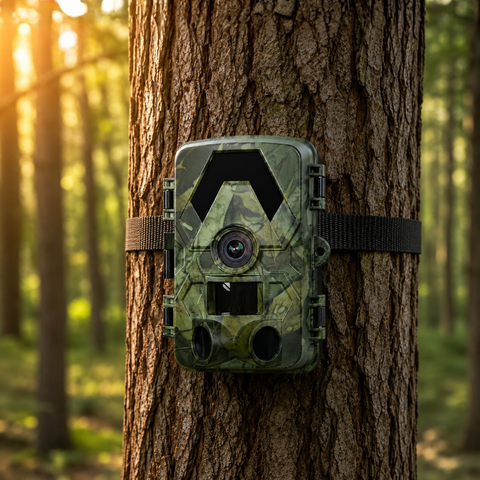

A WiFi trail camera lets you pull photos and videos straight to your phone without unscrewing the case, ejecting the card and walking back to a computer. It sits in a useful middle ground: more convenient than an offline SD-card camera, but simpler and cheaper to run than a cellular one. This guide walks through how these cameras actually work, the specifications that matter, and how to decide whether WiFi is the right fit for your site.
How a WiFi trail camera actually works
It helps to be clear about one thing up front: a WiFi trail camera creates its own short-range wireless connection that your phone joins when you are standing near it. It does not stream footage to you over the internet from across the country. You walk up to the camera, open the companion app, connect to the camera's local WiFi, and review or download whatever it has captured since your last visit.
That design is exactly why WiFi models are so popular for gardens, back fields, hunting plots and property edges you can reach on foot. You skip the fiddly routine of handling the microSD card in the cold, and you never risk leaving the card at home. The trade-off is simple and honest: you still need to be within range of the camera to sync. If you need footage delivered while you are sitting at home, that is a job for a 4G Trail Camera instead.
The specs that actually matter
Marketing pages love big numbers, but only a handful of specifications change how useful a camera is day to day. Here is what to weigh, using the standards we build to across the SightForest range.
- Image and video quality. Look for genuine 4K UHD video and a high-resolution photo mode. Our cameras capture 4K UHD footage with 60MP photos, which gives you enough detail to identify individual animals and read the scene clearly.
- Night vision. No-glow infrared LEDs illuminate the scene without a visible red glow that can spook wildlife or tip off intruders. Expect a realistic night range of around 20 metres; anything claiming far more is usually optimistic.
- Trigger speed and detection. A passive infrared (PIR) sensor wakes the camera when something warm moves into frame. A wide field of view, in the region of 112 to 130 degrees, means fewer missed passes at the edge of the shot.
- Weather sealing. For year-round outdoor use in a European climate, an IP66 rating is the sensible baseline. It handles heavy rain, dust and seasonal swings without you babysitting the housing.
- Storage. These cameras record locally to a microSD card of up to 128GB. WiFi is how you retrieve the files; the card is still where footage lives, so factor a card into your budget.
One point worth stressing: a card is almost always sold separately. If your camera does not ship with one, a 128GB microSD card gives you plenty of headroom for weeks of clips before you need to clear space.
WiFi, SD-card, 4G or solar: which one fits your site?
The connectivity type is the single biggest decision, and it comes down to how far the camera is from you and how often you can visit it. Here is how the SightForest range maps onto real situations.
Offline SD-card
The SD Trail Camera 4K is the simplest and most affordable option. It records to the card and you swap or read the card in person. Ideal if you visit the spot regularly anyway and want the lowest running cost with nothing to configure.
WiFi
The WiFi Trail Camera 4K adds on-site app access so you can review and download without touching the card. Best for locations you can walk to, where the convenience of phone syncing is worth a modest step up in price over the offline model.
4G cellular
The 4G Trail Camera 4K sends captures to your phone over the mobile network, so you get them wherever you are. It needs your own standard nano-SIM (not included) with data. Note that this is a normal nano-SIM, not an eSIM. Choose this for remote or hard-to-reach sites you cannot check in person often.
Solar-powered cellular
The 4G Solar Trail Camera 4K pairs cellular delivery with an integrated solar panel, so it can stay out for long stretches without battery swaps. This is the set-and-forget option for distant, permanent installations.
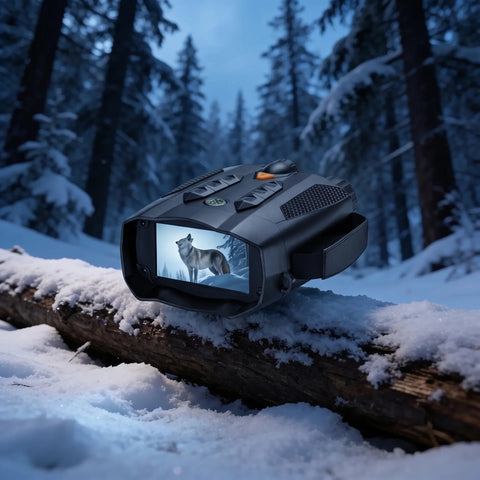
Prefer to compare the full lineup side by side? Browse the complete trail camera collection. And if your real goal is watching wildlife in real time with your own eyes rather than trapping stills, our night vision binoculars are a different tool worth a look.
No subscriptions, and what buying from SightForest looks like
One thing we will always be direct about: none of our cameras require a monthly subscription. There is no cloud plan to pay for, no per-photo fee, no locked features waiting behind a paywall. A WiFi camera in particular has nothing to subscribe to at all, because it syncs locally to your phone. With the 4G models, your only ongoing cost is whatever data plan you choose for your own nano-SIM.
Every SightForest order ships from our suppliers with dispatch in around 48 hours and tracked delivery within 7 to 9 business days across the EU. Each camera is backed by a 3-year warranty, and you have 30 days to return it if it is not the right fit for your site.
Making the call
If you can reach the camera on foot and just want to stop juggling memory cards in the field, a WiFi trail camera is the sweet spot on convenience and value. Confirm it delivers the essentials you actually rely on, real 4K capture, no-glow night vision, a fast PIR trigger, IP66 sealing and support for a 128GB card, then match the connectivity to how far away and how remote your location is. Get those two decisions right and the rest is just choosing where to mount it.
