
Patterning a mature buck is less about luck and more about steady, disciplined observation. A well-placed trail camera does the watching for you around the clock, building a picture of where a buck feeds, beds and travels long before you ever climb into a stand. This guide walks through how to turn a handful of cameras into a reliable read on buck movement so you can hunt with intent instead of hope.
Start by understanding what "patterning" really means
Patterning a buck means identifying the repeatable habits that govern his daily movement: which food sources he prefers, the trails he uses to reach them, the times he tends to move, and how weather and pressure shift that routine. No buck is perfectly predictable, but most mature deer settle into loose patterns during stable stretches of the season, especially early in the year and again during the pre-rut.
Your job is to gather enough data points to separate the signal from the noise. That is exactly where trail cameras earn their place. A single photo tells you a buck exists; a month of timestamped images tells you how he lives.
What to look for in every image
- Time of day. Note whether the buck is moving in daylight or strictly after dark. Consistent nocturnal activity usually means he feels pressure or is not yet motivated to move early.
- Direction of travel. Which way is he heading, and at what time? This hints at where he beds versus where he feeds.
- Wind and weather. Cross-reference photo timestamps with conditions. Many bucks move more freely on cooling temperatures or a front rolling through.
- Frequency. A buck that hits the same spot every two or three days is far more huntable than a one-time visitor.
Where to place cameras for the best data
Placement is everything. The goal is to cover the three pillars of a buck's world: food, water and travel corridors, without saturating the area with human scent. Approach every camera location as if you were setting up to hunt it, because pressure from checking cameras can push a buck off his pattern just as fast as a bad stand entry.
- Food sources. Field edges, mast-producing oaks and food plots concentrate deer and reveal feeding times. Place cameras where trails funnel into the food rather than in the wide open.
- Pinch points and funnels. Saddles, creek crossings, fence gaps and inside corners force deer to travel predictably. These are the highest-value camera locations for patterning travel.
- Scrapes and licking branches. During the pre-rut, community scrapes become inventory hubs. A camera here can log nearly every buck in the area within a week or two.
- Water and bedding edges. In warmer conditions or dry regions, water can be the anchor of a buck's routine. Set up on the downwind edge of bedding to catch movement without spooking him.
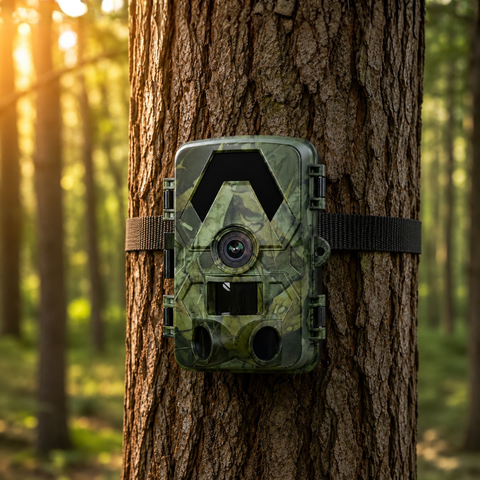
Mount cameras at roughly waist height, angle them slightly downward, and clear branches that could trigger false images in the wind. A wider field of view helps here; SightForest cameras cover a 112 to 130 degree field of view, so a single unit can watch an entire trail junction or scrape.
Choosing the right camera for how you scout
The best trail camera is the one that matches how often you can afford to disturb an area. If you can slip in quietly on the way to a stand, an offline card-based camera keeps things simple and cheap to run. If a spot is sensitive or far from the truck, cellular delivery lets you gather intel without ever walking in. All SightForest cameras share the same core imaging: 4K UHD video, 60MP photos, no-glow infrared to around 20 metres, a fast PIR trigger and an IP66 weatherproof rating, so the choice comes down to how the images reach you.
- Offline, low-pressure spots. The SD Trail Camera 4K records straight to a microSD card. It is ideal for locations you already walk past, with nothing to configure and no signal to worry about.
- On-site review. The WiFi Trail Camera 4K lets you pull images to your phone from a short distance, handy for backyard plots or spots where you want to check without pulling the card.
- Remote intel. The 4G Trail Camera 4K sends photos to your phone over cellular using your own standard nano-SIM (not included, and not an eSIM). Perfect for deep timber you only want to visit on the day you hunt.
- Set-and-forget seasons. The 4G Solar Trail Camera 4K adds a solar panel so a remote camera can run for months without a battery swap, keeping human intrusion to an absolute minimum.
Whichever model you run, there is no monthly subscription to send images or access features, so scaling up to several cameras across a property does not add a recurring bill. Pair any camera with a 128GB microSD card to hold weeks of high-resolution footage; SightForest cameras support cards up to 128GB.
Turn photos into a hunting plan
Data only helps if you act on it. Once you have two or three weeks of images from a location, look for the tightest patterns and build your hunt around them.
- Identify daylight windows. If a buck shows up at last light every few days on a cooling front, that is your entry, your stand and your date, all decided in advance.
- Map his movement. Combine directions of travel across multiple cameras to estimate bedding and feeding areas, then hunt the corridor between them rather than the food itself.
- Respect pressure. If daylight photos dry up after you start hunting or checking cameras, back off, let the area rest, and lean on remote cameras to monitor from a distance.
- Track the seasonal shift. Early-season food patterns break down as the rut approaches. Move cameras to scrapes and doe travel routes to stay ahead of the change.
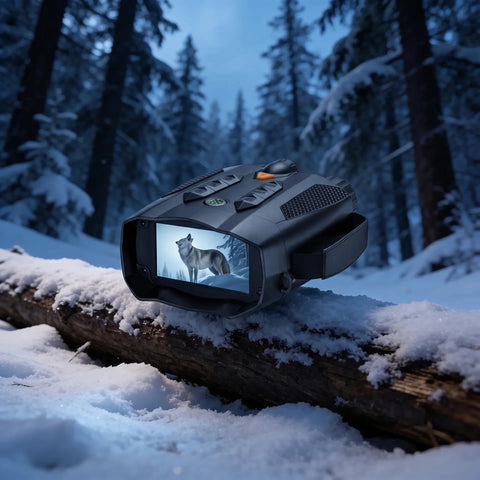
For glassing between camera checks, night-vision optics let you confirm what your cameras are telling you at dawn and dusk without adding intrusion; browse the night vision binoculars collection to pair long-range observation with your camera network.
Conclusion
Patterning a buck comes down to patient observation and disciplined access. Place cameras on food, funnels and scrapes, read every image for time, direction and weather, and let a few weeks of data reveal the buck's routine before you commit to a sit. Choose the camera style that lets you gather intel with the least disturbance, and you will spend the season hunting a plan rather than guessing. Explore the full trail camera collection to build a setup that fits your ground.
