
Navigating after dark is one of the more demanding parts of boating. On open water there are no streetlights, reflections play tricks on your eyes, and an unlit buoy or half-submerged log can appear far too late. Night vision gear closes that gap, letting you scan the water, shoreline, and horizon long before the naked eye would pick anything up.
This guide looks at how night vision performs in a marine environment, what genuinely matters when choosing gear for boats, and how a wildlife-focused camera or a pair of night-vision binoculars can earn their place aboard.
Why night vision belongs on the water
Marine conditions are unforgiving for optics. Salt spray, humidity, vibration, and constant low light all conspire against clear vision. A good night-vision device uses infrared illumination to build a bright image in near-total darkness, so you can identify hazards and features that would otherwise stay invisible.
On a boat, that translates into several practical uses:
- Spotting unlit hazards — floating debris, mooring lines, small craft without navigation lights, or a swimmer near the hull.
- Confirming channel markers and buoys when their lights are dim, distant, or lost in background glare.
- Approaching an anchorage at night, judging distance to other vessels and the shoreline.
- Watching marine wildlife — seabirds, seals, and nocturnal activity along the coast or in an estuary.
- Monitoring your boat at its mooring while you sleep aboard or step ashore.
The key point: night vision does not replace proper navigation lights, radar, or chartplotters. It complements them, giving your own eyes a serious upgrade for close-range awareness.
Binoculars vs. cameras: two different jobs
There are two broad ways to bring night vision aboard, and they solve different problems.
Night-vision binoculars for live scanning
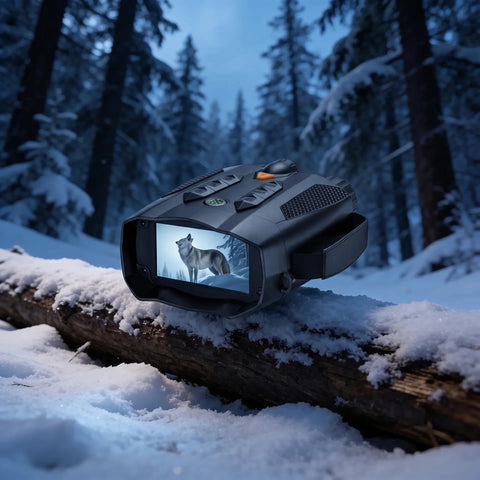
Handheld night-vision binoculars are the natural choice when you want to look, right now, at something on the water. They let you sweep the horizon, check a distant marker, or follow a seal along the shoreline in real time. Because they combine optical zoom with infrared illumination, they work well for the changing distances you deal with on a boat.
SightForest offers models in HD, 4K, and 4K Pro tiers, so you can match the resolution and range to how you actually boat. You can compare them in the night-vision binoculars collection. For coastal cruising and anchorage checks, the extra clarity of the 4K options makes it easier to tell a mooring buoy from a swimmer's head at range.
Trail cameras for unattended monitoring
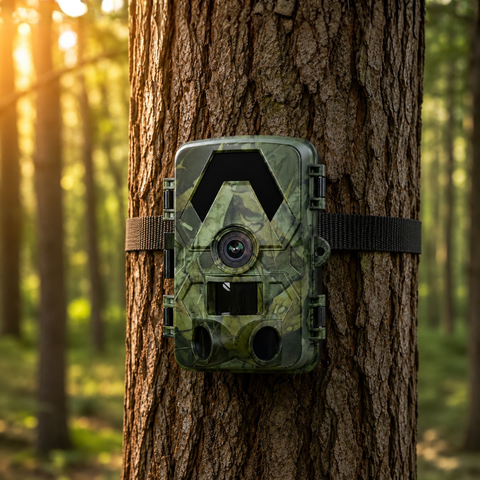
The second job is watching something while you are not there, or while you sleep. This is where a trail camera comes in. Originally built for wildlife, these cameras trigger on motion, record in 4K, and sit quietly for weeks on a set of batteries. Mounted on a pontoon, in a boathouse, or facing a jetty, they give you a record of anything that moved after dark.
SightForest cameras all shoot 4K UHD video with 60MP photos, use a no-glow infrared flash that reaches roughly 20 metres without a visible glow, and fire on a PIR motion trigger with a 112–130 degree field of view. They are rated IP66 against dust and heavy rain, which matters in an exposed marine setting, and take microSD cards up to 128GB.
Choosing gear that survives the marine environment
Boats are hard on equipment, so a few features are worth prioritising when you are shopping for night vision to use on or near the water.
- Weather sealing. Look for a genuine IP rating. An IP66 body handles spray and downpours, which is the minimum you want anywhere near the deck.
- No-glow infrared. A visible red IR glow can be distracting at night and gives your position away. No-glow illumination keeps things discreet.
- Storage that works offline. Out on the water you often have no reliable signal. A camera that records straight to microSD keeps working regardless of coverage. Pair it with a 128GB microSD card for weeks of footage.
- The right connectivity for your situation. This is the biggest decision, so it deserves its own look below.
Matching connectivity to how you boat
SightForest trail cameras come in four versions, and the right one depends on where the camera lives and how you want to reach it:
- SD Trail Camera 4K — fully offline, records to microSD, no network at all. Ideal for a mooring or boathouse you visit regularly and simply want a record of. Browse the full range in the trail camera collection.
- WiFi Trail Camera 4K — connects to your phone on-site over its own WiFi, so you can review and adjust it from a few metres away. Good for a boat kept at a home dock.
- 4G Trail Camera 4K — sends images over the cellular network, so you can check a remote mooring from home. It uses your own standard nano-SIM (not included) — a normal nano-SIM, not an eSIM.
- 4G Solar Trail Camera 4K — the same cellular reach with an integrated solar panel, built for long unattended stints where you cannot easily swap batteries.
Whichever you choose, there is no monthly subscription of any kind. The 4G models simply use a standard prepaid or contract nano-SIM you supply yourself, and everything else runs from the device. That is a real cost difference over the life of the gear compared with camera systems that lock you into a recurring plan.
Practical tips for night vision afloat
A few habits make night vision far more useful once it is aboard:
- Protect your night sight. Keep screen brightness low and avoid white light on deck so your eyes stay dark-adapted between scans.
- Mind reflections. Water bounces infrared, so scan at a slight downward angle when checking for close hazards rather than straight across a flat, mirror-like surface.
- Secure everything. Fit lanyards to binoculars and mount cameras firmly; vibration and a rolling deck are unkind to loose gear.
- Rinse after use. Salt is corrosive. A quick wipe with fresh water and a dry cloth after each outing extends the life of any optic.
- Carry spare storage and power. A second microSD card and charged batteries mean you never miss the moment you actually wanted to capture.
Buying with confidence
All SightForest orders dispatch within about 48 hours and arrive by tracked delivery in roughly 7–9 business days across the EU. Every product is backed by a 3-year warranty and a 30-day return window, so you can try night vision on your own boat and send it back if it is not the right fit.
For boating, the simplest starting point is to decide whether you mainly need to look or to monitor. If you want live scanning on deck, a pair of night-vision binoculars is the answer. If you want an unattended eye on a mooring or jetty, a 4K trail camera matched to your available signal will do the job for weeks at a time — with no subscription and no surprises. Either way, a little more visibility after dark makes every night on the water safer.
