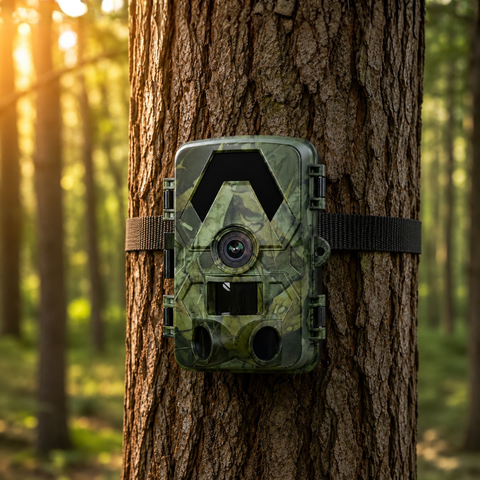
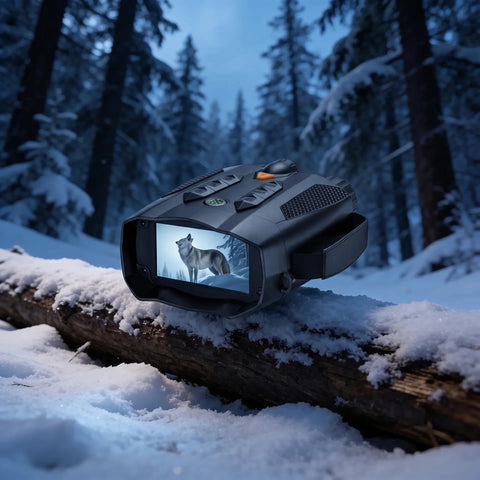

Setting up a trail camera in Europe is rarely as simple as strapping it to a tree. Between the EU's General Data Protection Regulation (GDPR), national hunting and property rules, and local nature-reserve restrictions, where and how you deploy a wildlife camera matters just as much as the camera itself. This guide breaks down the key legal differences between private and public land so you can monitor wildlife responsibly and stay on the right side of the rules.
Note: This article is general information for a European audience, not legal advice. Rules vary by country, region and even by municipality, so always confirm the specifics that apply where you live before deploying a camera.
Why GDPR Applies to Trail Cameras
Many people assume data-protection law only concerns websites and businesses. In practice, GDPR can apply the moment a camera records identifiable people. A trail camera positioned to capture only deer, boar or foxes deep in a forest is generally low-risk. The picture changes as soon as the lens can catch hikers on a path, a neighbour's garden, a shared driveway or a public trail.
Two principles from GDPR are especially relevant to trail-camera users:
- Purpose limitation: record only what you genuinely need. Wildlife monitoring, property security or research are legitimate purposes; casually filming passers-by is not.
- Data minimisation: aim the camera so it covers your target area and as little public space as possible. A tighter field of view is often the simplest compliance tool you have.
There is also a widely recognised "household exemption" for purely personal or domestic activity. It can cover a camera watching your own private garden, but courts across the EU have repeatedly narrowed it when a device films public areas or beyond the user's own property. Treat the exemption as narrow, not as a blanket permission.
Private Land: More Freedom, But Not Unlimited
On land you own or have the landowner's permission to use, you have the most latitude. For pure wildlife monitoring away from people, an offline camera is often the cleanest choice: images stay on the microSD card and never leave the device, so there is no cloud storage and no third-party data transfer to worry about. Our SD Trail Camera 4K is a good fit here, capturing 4K UHD footage and 60MP photos to a microSD card with no app and no monthly subscription.
Even on private land, a few sensible rules keep you compliant:
- Get landowner consent if the land is not yours, ideally in writing.
- Angle away from neighbours and public paths. A camera that overlooks a neighbouring property or a right-of-way can trigger GDPR obligations even on your own land.
- Post a notice where people may be recorded. If any part of your setup could capture visitors, tradespeople or delivery drivers, a visible sign explaining that recording takes place and who is responsible is best practice.
- Store footage securely and delete it when no longer needed. Keeping recordings indefinitely is hard to justify under data-minimisation principles.
Hunters and land managers should also check national hunting associations' guidance. Several EU countries regulate camera use during hunting seasons or in specific game-management contexts, entirely separate from privacy law.
Public Land, Reserves and Forests
Public and protected land is where most restrictions live. National parks, Natura 2000 sites, nature reserves and many state forests either prohibit unattended devices outright or require a permit. Placing a camera in these areas without permission can lead to confiscation or fines, and in sensitive habitats it may also disturb protected species.
Before deploying on non-private land, work through this checklist:
- Confirm the land's status and whether cameras or "installations" are allowed at all.
- Apply for a permit where the managing authority requires one, especially for research or long-term monitoring.
- Avoid trailheads, car parks and picnic areas where recording identifiable visitors is almost unavoidable.
- Never film another person's home or garden from public land; that is one of the clearest ways to breach privacy rules.
- Label your device with contact details so authorities can reach you rather than simply removing it.
Cellular Cameras and Data Transfer
Connected cameras add convenience and a compliance wrinkle: they transmit images off-site. A 4G Trail Camera 4K sends photos straight to your phone using your own standard nano-SIM (not included, and not an eSIM), with no monthly subscription tying you into a plan. That means the images travel over a mobile network to you, so it is worth being deliberate about what the camera can see and who can access the footage.
Practical steps for connected setups:
- Keep the field of view (typically 112–130 degrees) trained on wildlife zones, not paths.
- Protect your phone and account with a strong passcode, since that is where footage lands.
- Delete images you no longer need rather than letting an archive build up.
Where mains power and cabling are impractical for long deployments, a solar option like the 4G Solar Trail Camera 4K keeps the same subscription-free approach running for months. Whichever model you choose, the no-glow IR (effective to around 20 metres), PIR motion trigger and IP66 weather resistance are designed for discreet, low-disturbance monitoring, which also helps you keep footage focused on the animals you actually want to see. You can compare the full range in the trail camera collection.
A Simple Compliance Routine
Most legal risk with trail cameras comes down to three questions: whose land is it, can the camera see people, and where does the footage go? Answer those before you mount anything. On your own land, aim tightly, sign where needed and store recordings responsibly. On public or protected land, assume you need permission until you have confirmed otherwise. Choose the technology that fits the site, an offline microSD model for remote wildlife work, or a cellular one where you need images pushed to your phone, and keep your setup honest about what it records. Do that, and you can enjoy the wildlife on your screen with confidence rather than uncertainty.
