
If you are shopping for a wildlife camera in Europe, the question of SIM cards and mobile data causes more confusion than any other spec. Some cameras need a SIM to send photos to your phone, others never touch a mobile network at all, and the difference decides how much you pay and where you can install the camera. This guide explains exactly how trail camera connectivity works across European networks, so you can choose the right model with no surprises.
Which trail cameras actually need a SIM card?
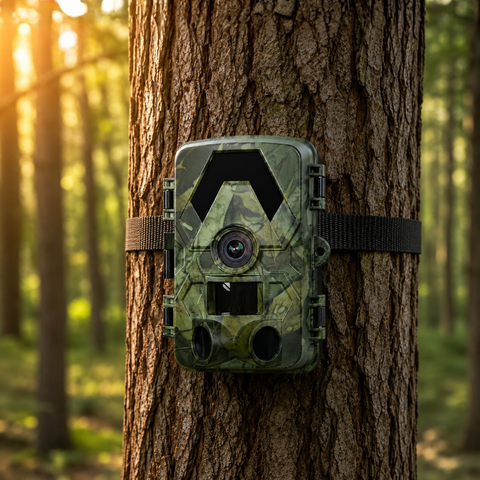
Only cellular cameras use a SIM. The word "cellular" (often written as 4G) means the camera has a built-in mobile modem and sends photos over the same networks your phone uses. Cameras without that modem store everything locally and never need a SIM. Here is how the categories break down:
- Offline (SD) cameras record to a microSD card only. No SIM, no data, no app in the field. You collect the card and view footage on a computer. This is the simplest and cheapest option.
- WiFi cameras connect to a phone or tablet on site, at close range, through a local app. There is no SIM and no mobile data involved, so you review images standing near the camera rather than from home.
- 4G cellular cameras use a mobile network to push photos and clips to your phone from anywhere with coverage. These are the only models that require a SIM card.
So if remote monitoring from home matters to you, you want a 4G model. If you are happy to walk to the camera, an offline or WiFi camera avoids the SIM question entirely. You can compare all of these in the trail camera collection.
How the SIM works on a 4G trail camera
Our cellular cameras, the 4G Trail Camera 4K and the solar-powered 4G Solar Trail Camera 4K, are built to accept your own standard nano-SIM (not included). That is an important detail worth repeating: you use a normal nano-SIM from a mobile operator, exactly like the one in a phone. It is not an eSIM, and there is no proprietary card locked to the brand.
This matters in Europe for a few practical reasons:
- No monthly subscription, ever. There is no locked-in plan tied to the camera and no recurring fee to SightForest. You choose your own SIM and your own tariff. This is the main way cellular cameras differ from many competitors that force a paid data plan.
- You control the cost. A prepaid data SIM with a small monthly allowance is usually enough, because compressed photo alerts are light on data. You pay your operator directly and can top up or cancel whenever you like.
- Standard format. Because it takes a common nano-SIM, you can source one from almost any European carrier or a machine-to-machine (M2M) data provider, without hunting for a special product.
Choosing a data SIM in the EU
A few points make the setup smoother across European countries:
- Coverage first. Pick the operator with the strongest signal where the camera will live, not just the cheapest tariff. A rural forest or field may favour one network over another.
- Data-only prepaid plans are ideal. You do not need calls or SMS, just a modest data allowance for image and video alerts.
- Check the PIN. Disable the SIM's PIN lock (usually via a phone) before inserting it, so the camera can connect automatically after a power cycle.
- Cross-border use. If you monitor sites in more than one country, an EU roaming SIM or an M2M SIM that works across networks saves you juggling multiple cards.
Once the SIM is in and configured through the app, the camera sends photos to your phone whenever its PIR sensor detects motion, so you get alerts without visiting the location.
When you don't need a SIM at all
Plenty of people never need cellular. If your camera sits somewhere you visit regularly, or you simply want the highest quality footage without any data cost, an offline model is the better fit. The SD Trail Camera 4K records everything to a microSD card, with no SIM, no app dependency, and nothing to configure on a network. It is also the most private option, since footage never leaves the card until you remove it.
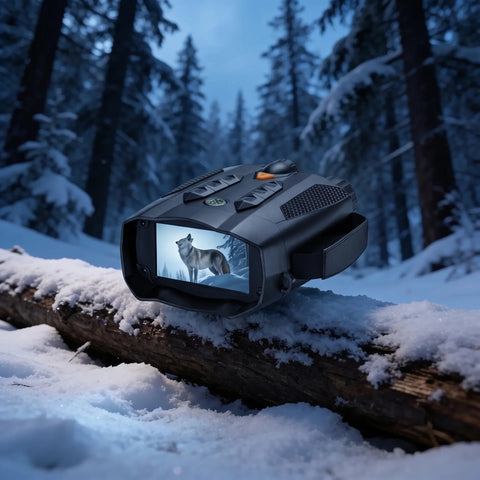
Whichever model you choose, the core imaging hardware is the same across the range: 4K UHD video with 60MP photos, a no-glow infrared system for night shots out to around 20 metres, a fast PIR motion trigger, a weatherproof IP66 housing for year-round outdoor use, and a wide 112 to 130 degree field of view. Storage supports microSD cards up to 128GB, and a 128GB microSD card gives you plenty of room for long deployments on any of the cameras, cellular or not. If you would rather watch wildlife live with your own eyes, the night vision binoculars are a separate, no-SIM way to observe after dark.
Ordering, warranty and returns
SightForest ships across Europe, with dispatch typically within about 48 hours and tracked delivery in roughly 7 to 9 business days. Every camera is covered by a 3-year warranty and a 30-day return window, so you have time to test connectivity in your own location and confirm the setup suits you.
The short version
Only 4G cellular cameras need a SIM, and they take your own standard nano-SIM (not included), never an eSIM and never a monthly subscription. Offline SD and on-site WiFi cameras skip mobile data completely. Decide first whether you need photos delivered to your phone from a distance: if yes, choose a 4G model and pair it with a good local data SIM; if no, an offline camera keeps things simpler and cheaper while delivering the same 4K image quality.
