
When people think about protecting a home, a driveway or a remote plot of land, two very different tools come up: traditional CCTV systems and trail cameras. They can look similar at a glance, yet they solve the problem in almost opposite ways. This guide breaks down where each one wins, so you can decide what actually fits your property and your budget.
How trail cameras and CCTV really differ
CCTV (closed-circuit television) is built around continuous, wired coverage. Cameras are cabled to power and often to a network video recorder, streaming a constant feed to a fixed location. That design is excellent for a shop front, a garage or a hallway where mains power and a wall are always close by.
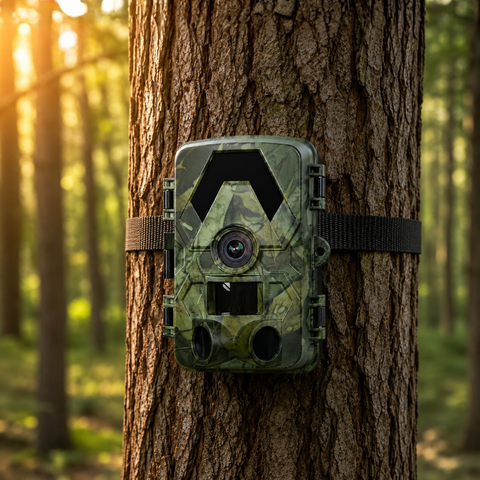
A trail camera works on a completely different principle. It is a self-contained, battery-powered unit with a passive infrared (PIR) sensor that only wakes and records when something moves. Originally designed to photograph wildlife in the field, that same rugged, off-grid design makes trail cameras a strong fit for the parts of a property where CCTV struggles: field gates, sheds, fence lines, remote cabins, boat moorings and long driveways with no cabling.
- Power: CCTV needs mains wiring; a trail camera runs on batteries, and a solar trail camera can run indefinitely on daylight alone.
- Installation: CCTV usually means drilling, cable runs and often an installer. A trail camera straps to a tree, post or bracket in minutes.
- Recording style: CCTV records continuously; a trail camera triggers on motion, so you review events, not hours of empty footage.
- Weatherproofing: quality trail cameras are IP66-rated for permanent outdoor use, whereas many indoor-grade CCTV units are not.
- Discretion: trail cameras are compact and use no-glow infrared, so they are far less obvious to an intruder than a mounted CCTV dome.
Cost, running fees and the subscription trap
This is where the gap becomes obvious. A wired CCTV system carries the cost of the cameras, a recorder, cabling and frequently professional installation. Many cloud-connected security cameras then add a monthly subscription just to store or view your own footage, and that fee never stops.
A trail camera is a single up-front purchase. SightForest cameras start at €99.99 for the offline SD Trail Camera 4K, which stores everything locally on a microSD card, with no account and no cloud fees. Even our connected models never carry a subscription. The 4G versions send images straight to your phone using your own standard nano-SIM (not included, and not an eSIM) on a normal pay-as-you-go data plan you already control. You buy the camera once, and that is the end of the recurring cost.
For a large or spread-out property, that maths matters. Wiring three CCTV cameras across a farmyard can cost more than an entire set of trail cameras, and the trail cameras leave no trenches, no visible cable and nothing for a thief to cut.
Choosing the right SightForest trail camera
Not every trail camera suits every job. The right choice depends mainly on how you want to receive footage and whether power or connectivity is available.
Offline or on-site properties
If the camera watches a shed, garage or gate you visit regularly, the SD Trail Camera 4K is the simplest option. It records to a microSD card (up to 128GB supported) that you swap and review on a computer, with zero connectivity to configure. Pair it with a 128GB microSD card for weeks of storage.
Live footage without wiring
Where you want images pushed to your phone, the 4G models transmit over the cellular network, so distance from your home Wi-Fi is irrelevant. On a remote plot with sunlight, the 4G Solar Trail Camera 4K adds a built-in solar panel so you rarely, if ever, touch the batteries. If the camera sits within range of your home network, the WiFi Trail Camera 4K lets you pull footage through its app on site.
Shared specs across the range
- 4K UHD video and 60MP photos for clear, usable evidence.
- No-glow infrared reaching roughly 20 metres at night, invisible to the human eye.
- Fast PIR trigger so movement is captured, not missed.
- IP66 weatherproof housing for year-round outdoor mounting.
- Wide 112 to 130 degree field of view to cover gateways and driveways.
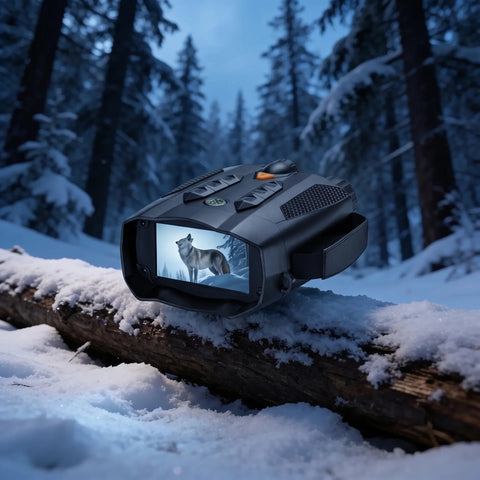
You can compare every model in the trail camera collection. If you also want to actively scan a boundary at night rather than wait for a trigger, our night vision binoculars complement a fixed camera setup nicely.
Which should you actually buy?
Choose CCTV when you need constant, continuous coverage of a fixed indoor or near-building area with mains power close by, and you do not mind the wiring or possible monthly fees. Choose a trail camera when you need flexible, discreet, weatherproof coverage of outdoor or remote spots, want footage on your phone without cables, and refuse to pay a subscription for your own images.
In reality, many households use both: CCTV at the front door, and trail cameras guarding the driveway entrance, the back gate or an outbuilding that cabling will never reach. Every SightForest camera ships within about 48 hours with tracked delivery in 7 to 9 business days, backed by a 3-year warranty and 30-day returns, so it is a low-risk way to close the gaps a wired system leaves behind.
