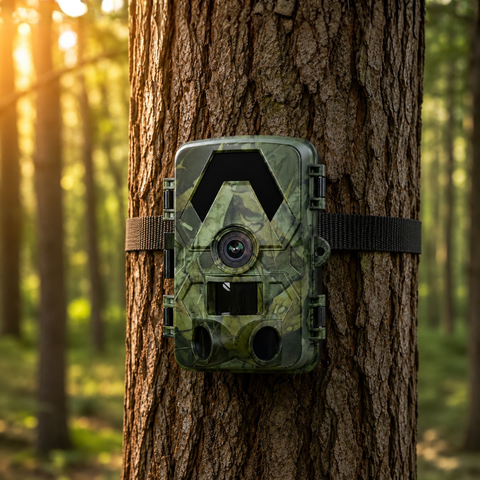

Predators like fox and coyote are cautious, largely nocturnal, and quick to change their routine the moment something feels wrong. A well-placed trail camera does the patient watching for you, revealing travel routes, feeding times, and how many animals are really working an area before you ever set up. This guide covers how to use trail cameras effectively for predator hunting across European ground, and how to choose the right model for the job.
Why trail cameras change the game for predator hunting
Foxes and coyotes move under cover of darkness and rarely follow a fixed schedule you can guess from a single sighting. Weeks of images build the pattern a single stakeout never will: which hedge line they slip through, what time they cross open ground, and whether you are dealing with one bold individual or a whole family group.
Good intelligence also keeps your hunting ethical and efficient. Knowing exactly when and where an animal appears means fewer wasted nights, cleaner setups downwind of the approach route, and less pressure on the land you are managing. For farmers and gamekeepers dealing with lamb or poultry losses, that same footage is proof of which predator is responsible.
- Pattern movement: confirm travel corridors, crossings, and the times animals are active.
- Count the population: distinguish a single fox from a mated pair or a coyote group.
- Verify the culprit: match losses to the actual predator rather than guessing.
- Plan the setup: position your hide and wind based on real data, not hope.
What to look for in a predator camera
Predator work is demanding on gear. You are shooting almost entirely at night, in cold and wet European weather, often on remote ground you can only check occasionally. A few specifications matter more than headline megapixels.
No-glow infrared
Fox and coyote are sharp-eyed and wary of anything unusual. No-glow infrared LEDs illuminate the scene without the faint red glow that low-glow cameras emit, so a cautious animal is far less likely to notice the camera. Every SightForest trail camera uses no-glow IR reaching roughly 20 metres, which is well matched to the trails and bait sites where predators pass close.
Fast, reliable triggering
A running fox gives you a fraction of a second. A responsive PIR motion sensor and a wide 112 to 130 degree field of view help you catch the animal in frame rather than as a tail disappearing off the edge. Clear 4K UHD video and 60MP stills then give you enough detail to tell individuals apart and confirm the species.
Weatherproofing and power
An IP66-rated housing shrugs off the rain and mud that come with a winter predator season. For remote sites you cannot visit often, power endurance is the deciding factor. A solar-charged camera can stay out for a whole season without battery swaps, while an offline SD model rewards you with very long standby life between visits.
Cellular vs on-site: choosing your model
The biggest decision is how you want to receive images. If a predator is actively hitting livestock, real-time cellular alerts let you respond the same night. If you are quietly patterning a fox on your own woodland, an offline camera you check every week or two is simpler and cheaper. Here is how the range breaks down for predator work.
- SD Trail Camera 4K (€99.99): fully offline, records to microSD, and stores nothing in the cloud. Ideal for patterning a known area where you can retrieve the card on a routine.
- WiFi Trail Camera 4K (€129.99): pulls footage to your phone on-site over its own app, so you can review images at the camera without pulling the card in the field.
- 4G Trail Camera 4K (€159.99): sends images straight to your phone over the cellular network, so you get alerted the moment a predator appears, even from home. It uses your own standard nano-SIM (not included), and there is no monthly subscription of any kind.
- 4G Solar Trail Camera 4K (€279.99): the same cellular alerts with a built-in solar panel for hands-off, season-long deployment on remote ground. Also runs on your own standard nano-SIM (not included), again with no subscription.
That last point is worth underlining. Many cellular trail cameras lock you into recurring data plans. SightForest 4G cameras never charge a subscription. You simply fit your own standard nano-SIM (not an eSIM), and you are in control of the data plan and the cost. For a season-long predator project across multiple sites, that difference adds up quickly.
Placement and field tips for fox and coyote
Even the best camera underperforms if it is badly placed. Predators read their environment closely, so setup discipline pays off.
- Find the pinch points: mount along established trails, hedge gaps, fence crossings, gateways, and the edges of fields where livestock losses occur.
- Mind the angle: face the camera along the trail rather than across it, giving the sensor more time to trigger as the animal approaches.
- Set the height low: around 40 to 60 cm off the ground frames a fox or coyote well and reduces empty overhead shots.
- Watch the sun and wind: avoid pointing east or west into sunrise and sunset glare, and keep your own scent off the camera by handling it with clean gloves.
- Use a fixed reference: a small scent lure or a natural feature at a set distance helps you judge the size and identity of returning animals.
- Bring enough storage: night video fills a card fast, so a high-capacity 128GB microSD card keeps a busy site running between visits.
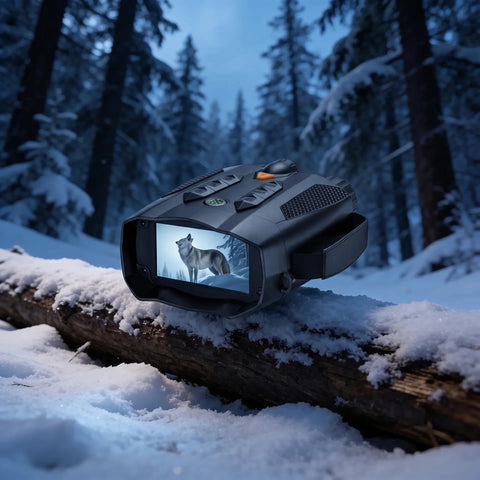
For the moment of the hunt itself, a trail camera tells you where and when, but it will not help you make the shot in the dark. Pairing your patterning with a set of night-vision binoculars lets you scan and confirm the animal in low light before you commit.
Getting started
If you are patterning known ground on a budget, start with the offline SD model and a large card. If you need to react to active predation the night it happens, a 4G camera with your own nano-SIM and no subscription is the smarter tool, and the solar version keeps remote sites running untouched for a full season. Every SightForest camera ships within about 48 hours with tracked delivery in 7 to 9 business days, and is backed by a 3-year warranty and 30-day returns, so you can build out your predator setup with confidence. Browse the full trail camera collection to match the right tool to your ground.
