
Wild boar are among the most rewarding and most frustrating animals to monitor. They move mostly after dark, follow the wind, and shift their routines the moment they sense pressure. A well-placed trail camera turns that unpredictability into a readable pattern, showing you exactly where a sounder feeds, when it moves, and how many animals are using a spot. This guide covers the setup and timing decisions that matter most for boar across European ground.
Where wild boar give themselves away
Boar are creatures of routine tied to food, water and cover. Before you mount anything, spend time reading the ground for the sign that tells you a camera will actually catch something. The best locations concentrate movement into a narrow, predictable line the camera can watch.
- Mud wallows: Boar wallow year-round to cool down and shed parasites. A fresh, churned wallow is one of the highest-traffic spots you can find.
- Rooting and feeding edges: Turned-over soil along field margins, oak and beech stands during mast, and maize edges in late summer draw sounders night after night.
- Rubbing trees: After wallowing, boar rub against trunks and posts, leaving mud smears at belly and shoulder height. These posts are used repeatedly.
- Trails and pinch points: Gaps in fencing, gate corners, and gaps between thickets funnel animals into a single lane, which is ideal for a reliable trigger.
- Water: In dry spells, ponds and ditches become dependable meeting points.
Setup: height, angle and detection
Boar are low, wide and fast, so a camera set for deer will often miss them or clip only their backs. Adjust for the animal in front of you.
Height and angle
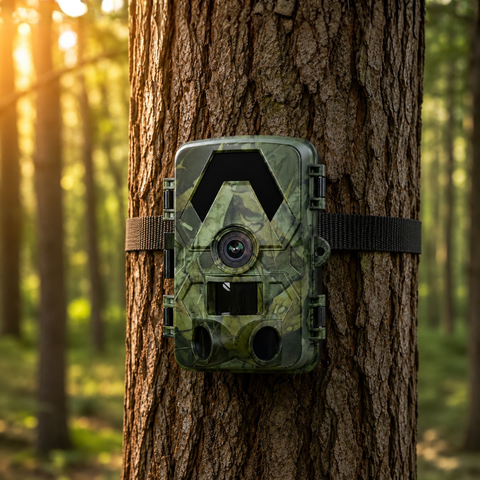
Mount the camera lower than you would for deer, roughly 40 to 60 cm off the ground, so the sensor and lens sit at boar body height. Angle it slightly downward toward the trail or wallow, and aim across the expected path rather than straight down it, so an animal spends longer in the detection zone. Clear grass, ferns and thin branches from the foreground, as moving vegetation is the number one cause of empty triggers.
PIR trigger and IR
Boar body heat against cool night ground gives a strong signal for the PIR trigger, but they move quickly, so keep trigger delay short and use a burst of photos or a short video clip to capture the whole sounder. A wide field of view, in the 112 to 130 degree range on our cameras, helps you cover a wallow or a broad feeding edge from a single tree.
For nocturnal animals like boar, invisible illumination matters. Our cameras use no-glow infrared reaching to around 20 metres, so there is no red flash to spook a wary sounder or advertise the camera's position. Combined with 4K UHD video and 60MP photos, you get enough detail to count animals, judge size, and tell individuals apart. An IP66 housing keeps the unit sealed against the rain and mud that come with boar ground.
Timing: when boar actually move
Wild boar are strongly nocturnal, especially where they face hunting pressure. Understanding their daily and seasonal rhythm tells you when to expect action and how long to leave a camera in place.
- Nightly window: The heaviest movement is usually from dusk into the first hours of darkness, with a second pulse before dawn. Midday sightings are rare except in undisturbed forest.
- Moon and weather: Boar often move more on darker nights and after rain, when soft ground makes rooting easy. Wind direction shapes their approach, so note it against your triggers.
- Seasonal food: Late summer and autumn concentrate boar on ripening crops and the mast under oak and beech. Winter pushes them toward reliable feeding and thicker cover.
- Give it time: Leave a camera in one spot for at least one to two weeks before judging it. Boar routines rotate across a home range, and a quiet location can turn busy overnight.
Choosing the right camera for the job
How you plan to check the camera should drive which model you pick. On heavily used boar ground where you visit often, an offline SD Trail Camera 4K writing to a microSD card is simple, silent and dependable, and you review footage when you swap cards. If the wallow sits far from any track, a cellular 4G Trail Camera 4K sends captures straight to your phone so you can pattern a sounder without repeat visits disturbing the area. Cellular models use your own standard nano-SIM (not included, and never an eSIM), and there is no monthly subscription of any kind. For remote spots you rarely reach, the 4G Solar model keeps itself topped up from daylight. Whichever you choose, a large card such as our 128GB microSD card lets a camera record weeks of 4K clips before it fills, which matters when you are running long, unattended sessions on boar.
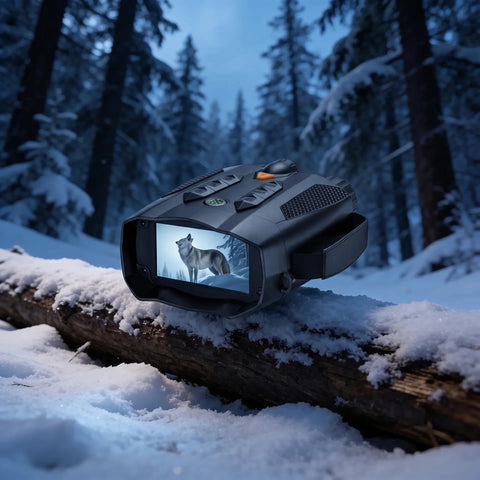
To read animals in real time rather than after the fact, a pair from our night vision binoculars collection lets you glass a feeding field or a wallow at dusk and confirm what the camera is telling you.
A quick field checklist
- Find fresh sign first: wallows, rooting, rubbing posts and pinch points.
- Mount low, 40 to 60 cm high, angled down and across the trail.
- Clear all foreground vegetation to stop false triggers.
- Use short trigger delays with photo bursts or video to catch the whole sounder.
- Rely on no-glow IR at night so you never spook a wary animal.
- Focus your expectations on the dusk-to-dark and pre-dawn windows.
- Leave the camera in place for one to two weeks before moving it.
Wild boar reward patience and good positioning more than expensive gear. Read the ground, set your camera low and out of sight with silent no-glow IR, and give a spot enough nights to reveal its pattern. Once you know when and where a sounder moves, everything else, from planning a sit to simply enjoying the footage, becomes far easier. Every SightForest camera ships with a 3-year warranty and a 30-day return window, so you can set one out on your ground with confidence.
