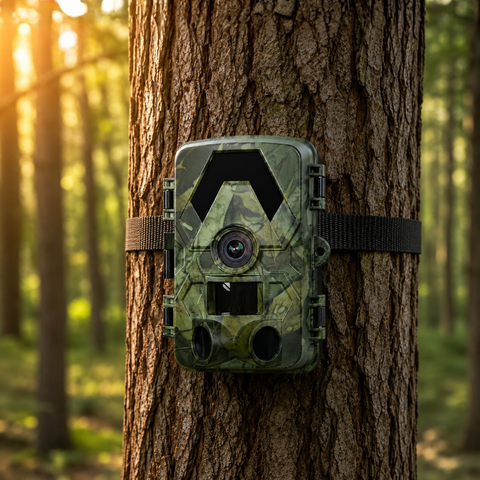
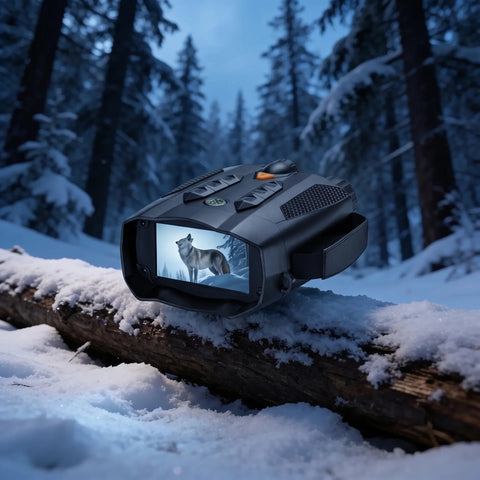

The best trail camera in the world will disappoint you if it's pointed wrong. Most "empty" cards and half-cropped deer come down to trail camera placement — height, angle, distance and the direction it faces. Get these four right and your hit rate jumps. Here's the field-tested setup.
Height: match it to your target
- Deer & similar game: about 4–5 feet (chest height). This frames the body and antlers for clean identification.
- Smaller animals (turkey, raccoon, fox): drop to 2–3 feet so they fill the frame.
- Big game (elk, bear): go a touch higher, 5–6 feet, for the best angle.
A camera with a built-in screen, like the 4G+ Trail Camera, makes this easy — you can frame and confirm the shot right at the tree instead of guessing.
Angle: shoot down the trail, not across it
Mount at a 45° angle to the trail rather than head-on. A head-on camera catches the animal in one frame; an angled one gives you several full-body shots as it moves through — better for counting points and IDing individuals. Tilt the camera slightly downward (about 5–10°) so the detection zone sits where animals actually walk, not over their backs.
Distance: stay back
Set the camera 3–5 metres (10–15 feet) from the trail. Too close and fast movers blur past before the frame fills; too far and you lose detail at night. This range also keeps the camera outside an animal's immediate awareness. Pair it with night vision rated for the distance — SightForest cameras run no-glow IR to 20–25 m, so nothing sees the flash.
Direction: never face the sun
Point the camera north whenever you can. Facing due east or west means the low sun at dawn and dusk — exactly when animals move — will blow out your images. North-facing keeps light even all day.
Five quick mistakes to avoid
- Vegetation in the detection zone — a swaying branch triggers hundreds of empty photos. Clear a small lane.
- Mounting too high and aiming flat — you shoot over the animal's back.
- Facing the sunrise/sunset — washed-out frames.
- Too close on a fast trail — blurred, half-frame subjects.
- Loose mount — wind shifts the aim. Strap firmly to a solid trunk.
Trigger speed matters here too
Even perfect placement can't fix a slow camera. A 0.1–0.5 second trigger catches a moving animal in frame; the 4G Solar Trail Camera 4K fires in 0.3 s and sends the shot to your phone, so you can fine-tune placement remotely without spooking the spot.
Setting up your gear? Each SightForest camera has a step-by-step guide in our setup guides, or browse all trail cameras.
FAQ
What is the best height for a trail camera?
About 4–5 feet for deer-sized game, 2–3 feet for small animals, and 5–6 feet for large game. Angle slightly downward so the sensor covers where animals walk.
Which direction should a trail camera face?
North if possible. Avoid facing due east or west, where sunrise and sunset glare will wash out images.
How far should a trail camera be from the trail?
Around 3–5 metres (10–15 feet). Close enough for night detail, far enough to capture fast movers full-frame and stay discreet.
Why is my trail camera taking empty photos?
Usually vegetation moving in the detection zone, or the camera facing the sun. Clear a small lane in front of the lens and re-aim away from sunrise/sunset.
Still choosing a camera? See the complete 4G trail camera buying guide.
