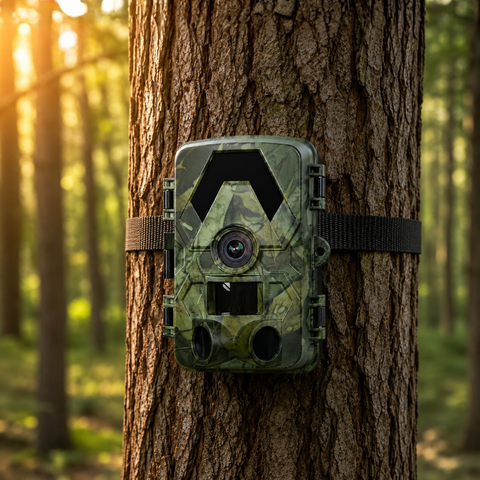
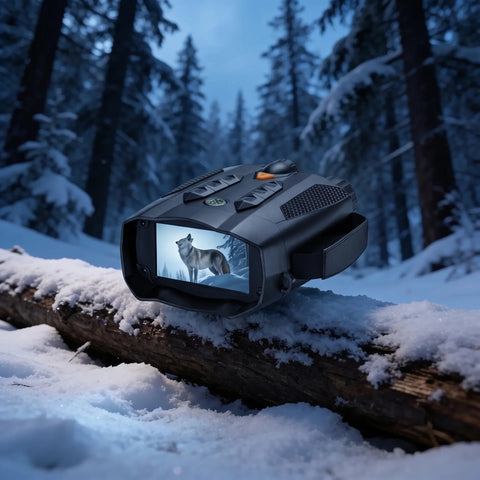

A 4G trail camera sends every photo straight to your phone over the mobile network, so you can watch a trail, a feeder or a back gate from anywhere — without walking in and leaving your scent. But "cellular" is only one of the things that separate a camera you'll trust for years from one that frustrates you by week two. This guide breaks down how to choose a 4G trail camera in plain English, then shows which SightForest model fits each kind of user.
What is a 4G (cellular) trail camera?
A cellular trail camera has a SIM card inside. When motion triggers it, it captures the shot and pushes it to an app on your phone over 4G LTE — the same network your phone uses. That's the key difference from the two other types:
- 4G / cellular — works anywhere with signal, delivers photos in real time. Best for remote land and "check without visiting."
- WiFi — you connect from your phone when you're within range (a few dozen metres). Great for a garden or yard, no data plan needed.
- Standard (SD-only) — stores to a card you collect by hand. Cheapest, but you have to physically swap the card.
If you can't easily walk to the camera, cellular wins. If it's close to the house, WiFi or SD is often enough. (We compare these in depth in Cellular vs WiFi trail cameras.)
The 7 things that actually matter
1. Connectivity
For a cellular camera, look for dual-SIM 4G: it automatically switches to whichever carrier has the strongest signal where the camera sits, instead of locking you to one network. That single feature is the difference between reliable alerts and dead zones. No mobile coverage on your land? A WiFi model that needs no SIM may serve you better.
2. Image quality (don't just chase megapixels)
Resolution matters — 4K UHD holds detail when you crop or zoom to read a tag or count points, where 1080p softens. But be sceptical of huge megapixel claims: many cameras interpolate (software-inflate) the number. A real 4K sensor with 30–48 MP stills is plenty; the honest test is looking at real sample images, not the box.
3. Night vision & flash type
At night a trail camera fires an infrared (IR) flash you light the scene with. There are two kinds:
- No-glow (940 nm) — completely invisible. Nothing — deer or trespassers — sees a thing. The discreet choice.
- Low-glow (850 nm) — slightly longer reach, but emits a faint red glow some animals notice.
Every SightForest camera uses no-glow IR, so it stays hidden. Check the stated night range too (ours run 20–25 m).
4. Trigger speed & detection range
Trigger speed is how fast the camera shoots once it senses movement. Aim for the 0.1–0.5 second band — slower than that and a trotting deer is half out of frame. Detection range (how far the sensor "sees") of roughly 18–25 m suits most trails.
5. Power: solar vs battery
Solar + rechargeable is the true set-and-forget option — a good panel tops up in 2–3 hours of sun and the camera runs for months. One caveat: under heavy canopy a panel may only get a fraction of full sun, so for deep-woods spots a long-life battery (or an add-on solar panel) is worth planning for. Budget cameras on AA lithium cells are still dependable if you don't mind changing them.
6. Weatherproofing
It lives outside year-round, so look for an IP66 rating and a wide operating range (ours are rated −20 °C to 60 °C). Cold also drains batteries faster — another point for solar or lithium.
7. Storage & data
Footage saves to a microSD card (up to 128 GB on our cameras); cellular models also send compressed previews over data. A fast, reliable card matters — a tested 128GB SD card is cheap insurance against corrupted clips.
SightForest 4G trail cameras, compared
| Camera | Best for | Key specs |
|---|---|---|
| 4G Solar Trail Camera 4K | Remote land, serious users | 4K · 48MP · dual-SIM 4G · solar + rechargeable · no-glow 25 m · 0.3 s · IP66 |
| 4G+ Trail Camera | Aiming & reviewing in the field | 4K · 36MP · dual-SIM 4G · built-in 2.4″ screen · no-glow 20 m · IP66 |
| 4G+ / WiFi Trail Camera | No SIM, longest battery | 4K · 32MP · WiFi + app (no SIM) · up to 12-month battery · no-glow 20 m |
| Full HD 1080P Trail Camera | Budget, property & garden | 1080p · 20MP · microSD (offline) · AA batteries · no-glow 20 m · IP66 |
See the full line-up on the trail cameras page.
Which one is right for you?
- Remote property, you want 4K stills on your phone and never want to think about power → the 4G Solar Trail Camera 4K.
- You like to aim and check shots right at the tree → the 4G+ Trail Camera with its built-in screen.
- No phone signal on your land, or you'd rather skip a SIM → the 4G+ / WiFi Trail Camera with up to 12-month battery.
- Watching a garden, yard or cabin on a budget → the Full HD 1080P Trail Camera.
Not sure? Answer a few questions and we'll match you in 30 seconds — Find my gear →
FAQ
Do 4G trail cameras need a subscription?
Cellular cameras use mobile data to send photos, so they need an active SIM/data plan. Plans are usually small and scale with how many photos you send. A WiFi or SD-only camera has no recurring data cost.
Do trail cameras work without WiFi?
Yes. A 4G/cellular camera uses the mobile network, not your home WiFi, so it works on remote land with no internet. WiFi models, by contrast, need you to be within range to pull images.
What's the best height to mount a trail camera?
For deer and similar game, about 4–5 feet (chest height), angled slightly down and roughly 45° to the trail rather than head-on, set back 3–5 m. Facing north avoids sunrise/sunset glare. We cover this in our trail camera placement guide.
Do solar trail cameras work in winter or under trees?
They do, but charging depends on light. Short winter days and dense canopy reduce how much the panel harvests, so for shaded spots pick a model with strong battery backup or add a separate solar panel. In open areas, solar easily runs year-round.
Is no-glow or low-glow better?
No-glow (940 nm) is invisible and best when you don't want the camera detected — ideal for wary game and security. Low-glow (850 nm) reaches a little farther but shows a faint red light. All SightForest cameras are no-glow.
Ready to choose? Browse the SightForest trail cameras or take the 30-second gear quiz.
Related guides: Cellular vs WiFi · Are solar trail cameras worth it? · Where to place a trail camera
